
First-time buyers who walk into Yiwu International Trade City without a plan typically share the same experience: an overwhelming number of booths, no reliable way to benchmark pricing, and days spent in districts that do not match their product category or margin goals. The market is not difficult to navigate because it is disorganised — it is difficult because it is enormous, and the cost of moving through it randomly is measured in wasted days, incomplete quotes, and suppliers chosen for convenience rather than reorder capability.
A structured Yiwu wholesale market guide changes the economics of a sourcing trip. This guide explains how to route through Districts 1–5 with an ROI filter, what to measure on the floor, and how to convert market visits into a repeatable private label sourcing system.
The most common and expensive mistakes are structural — they happen before a buyer reaches the first booth.
| Mistake | Cost Consequence |
|---|---|
| Visiting districts in the wrong order | Decision fatigue by midday; best-energy hours wasted on low-priority categories |
| No target cost before entering | Paying the first reasonable price rather than the benchmarked price |
| Comparing incompatible quotes | Different quality tiers, pack specs, and MOQs that cannot be evaluated against each other |
| Selecting vendors who cannot scale | Batch mismatch on reorders; quality drift after the first order |
| Leaving without quote-ready documentation | Slow follow-up; suppliers move on; momentum lost |
The pattern is consistent: buyers who treat the Yiwu International Trade City visit as a shopping trip get shopping results. Buyers who treat it as a sourcing audit — with defined criteria, structured documentation, and a pre-built comparison framework — leave with the foundation of a scalable supplier relationship.
Use this filter for every district: demand velocity + customisation potential + logistics friendliness + reorder stability. The highest-ROI district for your business is the one where your product category intersects with suppliers who can support consistent reorders at your target MOQ.
A district-by-district plan helps buyers benchmark faster, collect cleaner quotes, and prioritise suppliers that can scale.
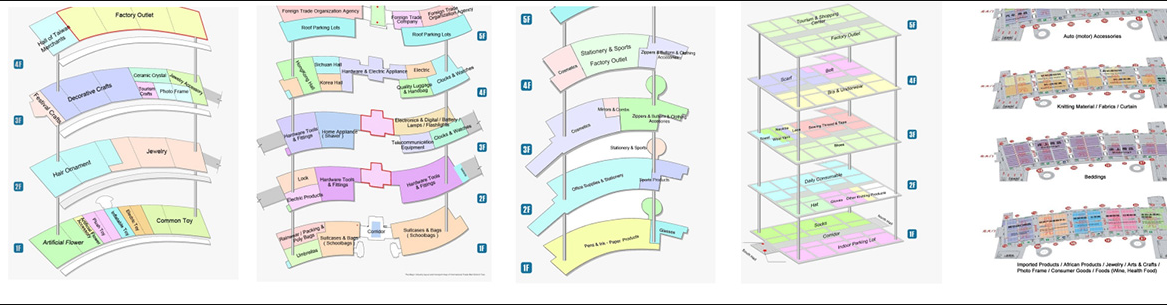
Category character: high variety, fast trend cycle, low-to-mid unit cost, strong bundle potential
ROI angle: District 1 suits buyers building gift and lifestyle SKUs that benefit from trend responsiveness and rapid sampling. Unit economics are attractive, and suppliers in this district are generally experienced with small-batch sampling and short development cycles.
Best fit for: private label gift brands, promotional product buyers, e-commerce sellers with frequent seasonal drops
Watch: trend-driven items here have shorter demand windows — prioritise suppliers who can deliver in 30–45 days rather than those who optimise for rock-bottom cost at very long lead times.
Category character: stable demand, standardised specifications, repeat purchase patterns
ROI angle: District 2 suits buyers who need operational reliability more than trend exposure. Products here are less differentiated but significantly more predictable — MOQs are often more flexible, reorder quality is more consistent, and supplier relationships are easier to standardise.
Best fit for: B2B buyers, industrial supply distributors, home improvement and repair categories
Watch: customisation depth is lower here — if your brand depends on unique packaging or materials, validate this capability explicitly before committing.
Category character: mid-to-high SKU variety, good differentiation potential, seasonal demand patterns
ROI angle: District 3 is well-suited to buyers building differentiated assortments. The category mix here includes products with strong private-label pathways — branded packaging, custom colourways, and accessory bundles that create perceived value without requiring complex manufacturing.
Best fit for: lifestyle brands, subscription box businesses, influencer-driven product lines, seasonal campaign buyers
Watch: seasonal demand spikes in this district can create capacity pressure — build lead time buffers for Q4 peak categories.
Category character: brandable products with strong packaging upgrade potential, higher average order value per SKU
ROI angle: District 4 offers some of the strongest private label margins in the market. Home lifestyle products — textiles, storage, decorative items — respond well to packaging investment and brand positioning. Buyers who control the packaging experience here build genuine differentiation.
Best fit for: home and lifestyle brands, interior decor retailers, marketplace sellers building defensible positions through presentation quality
Watch: textile categories require material specification discipline — define thread count, composition, weight, and finish requirements in writing before sampling.
Category character: higher-ticket items, project order potential, larger volume per SKU
ROI angle: District 5 suits buyers with higher average order values and longer planning cycles. The import pavilion section is useful for buyers sourcing internationally-branded goods or products not manufactured in Yiwu directly. Bedding and curtain categories here support larger project orders for hospitality, real estate, and commercial buyers.
Best fit for: interior project buyers, hospitality procurement, premium home goods brands, commercial volume buyers
Watch: MOQs in this district tend to be higher — budget and timeline planning before entering is more important here than in Districts 1–3.
Before walking into any district, define what a successful day looks like in measurable terms.
| KPI | What It Measures | Target |
|---|---|---|
| SKUs shortlisted per day | Sourcing productivity | 15–25 for a focused single-district day |
| Supplier quote completeness rate | How many give MOQ, lead time, and carton spec in one visit | Above 60% indicates district and supplier tier match |
| Cost-down potential | Best quote vs your pre-set target cost | Track the gap; use it in negotiation follow-up |
| Sample cycle time | Days from selection to sample receipt | Under 14 days for standard items |
| Reorder readiness score | QC capability, batch control, packaging consistency | Three basic questions: can they repeat it? have they before? do they document it? |
Build a one-page sourcing brief per product category: target FOB price, acceptable MOQ range, required materials and specifications, packaging requirements, compliance needs for your target market, and your timeline for sampling and bulk delivery. This brief is the benchmark against which every booth conversation is evaluated.
| Time Block | Priority |
|---|---|
| Morning (highest energy) | The district that matches your highest-margin category |
| Midday | Supporting SKU district for bundles or upsells |
| Afternoon | Supplier comparison, sample selection, quote documentation |
Resist the temptation to cover all five districts in one day. Two districts covered thoroughly produce better sourcing outcomes than five covered superficially.
Five questions to ask at every booth:
What is the minimum order quantity for this item?
What is the standard production lead time after deposit?
Can you customise the packaging, colour, or logo?
Can you provide a sample, and what is the sample cost and lead time?
Have you supplied this item to overseas buyers before, and can you show reorder history?
The last question is the most important and the most commonly skipped. Suppliers who cannot demonstrate reorder history are higher risk for quality drift on repeat orders.
Product photos (multiple angles, including carton)
Item number and product specification sheet if available
Carton dimensions and packing quantity
Unit price tiers at multiple quantities (MOQ, 2× MOQ, 5× MOQ)
Standard production time and payment terms
Create a supplier comparison sheet within 24 hours while details are fresh. Shortlist three to five finalists per category for sampling. For each finalist, note what made them the shortlist choice — this becomes the baseline for the next sourcing visit.
A market visit that produces great quotes but no repeatable process has limited compound value. The Yiwu International Trade City visit is most valuable when it feeds a system.
| Phase | Action | Outcome |
|---|---|---|
| Core SKU set | Start with 10–20 items with stable, predictable demand | Reliable cashflow base; supplier relationship depth |
| Seasonal additions | Add 5–10 trend or seasonal SKUs per quarter | Controlled risk; market responsiveness |
| Packaging standardisation | Define packaging specs early and apply them consistently | Reduced returns; higher perceived brand value |
| Reorder SOPs | Golden sample retention, pre-shipment QC, batch consistency documentation | Supplier accountability; scalable quality |
The compound effect: buyers who build this system after two to three market visits have supplier relationships strong enough to negotiate better pricing, faster sampling, and priority production slots during peak periods.
Q1: What is Yiwu International Trade City?
Yiwu International Trade City is a wholesale market complex in Yiwu, Zhejiang Province, China — one of the largest small-commodity trading markets in the world. It is organised across five districts, each concentrated around different product categories, with thousands of supplier booths across multiple floors. It serves both domestic and international buyers and is particularly well-suited to multi-category, multi-SKU sourcing.
Q2: Are all five districts equally useful for every product category?
No. Each district has a different category concentration and supplier type profile. A Yiwu wholesale market guide helps you match your specific product category and margin requirements to the right district and floor before you arrive — rather than discovering through trial and error on the day.
Q3: How do I calculate ROI from a Yiwu sourcing visit?
Track four metrics: cost reduction versus your pre-trip benchmark, number of quote-complete supplier contacts collected, sample approval rate in the 30 days after the visit, and reorder quality consistency on the first repeat order. ROI is strongest when a visit produces two to three supplier relationships that can support consistent reorders — not a collection of one-time deals.
Q4: What should I measure during a 30–60 day sourcing pilot after the market visit?
Supplier response speed to follow-up communications, sample lead time accuracy versus the quoted timeline, defect rate on the first sample or pilot batch, packaging damage rate on arrival, landed cost accuracy versus the booth quote, and reorder consistency — does batch two match the golden sample approved after the market visit?
Q5: What information do I need to prepare to get a sourcing plan or quotation?
Provide: your target product categories with reference images or competitor product links, target order quantity per SKU and your target price range, customisation requirements (logo, materials, colours, packaging), target market and any compliance or labeling requirements, and your timeline for sampling and shipment. The more specific the brief, the more useful the plan and quotation.
Yiwu International Trade City rewards buyers who approach it as a system — with a defined route, a pre-built benchmark, and a documentation process that converts booth conversations into scalable supplier relationships. A structured Yiwu wholesale market guide does not reduce the complexity of the market. It converts that complexity into organised, actionable sourcing intelligence.
Visit our website and submit your target categories, reference links, MOQ requirements, and timeline to receive a customised district route plan and sourcing quotation.
 0086-579-85208991
  info@binachina.com
 English