
Most private label brands fail quietly. Not from a bad product idea — but from a sourcing system that cannot keep up with growth. Inconsistent quality between reorders. Packaging that arrives wrong. Suppliers who make silent substitutions once the relationship is established. A brand that wins its first batch and loses its second.
A capable China sourcing agent does not just find factories. They build the closed-loop process that converts product ideas into repeatable, brand-ready inventory at scale. If you are exploring Yiwu agent service support for a multi-SKU private label operation, this guide explains what that process should look like — and how to measure whether it is working.
Without a structured sourcing system, growth creates more problems than it solves. The patterns are consistent across brands that hit a ceiling:
| Failure Pattern | Root Cause | Business Consequence |
|---|---|---|
| Quality drift between batches | No golden sample retention; no spec lock | Returns, negative reviews, refund pressure |
| Commoditization | Same product, different logo | Price war with competitors sourcing the same item |
| Hidden cost accumulation | No BOM control; unplanned rework | Margin erosion that only shows up at scale |
| Supplier switching risk | No documentation; no traceability | Supply disruption when a factory changes or closes |
| Compliance failures | No label/certification coordination | Market access problems in regulated categories |
These failures are not random. They are predictable consequences of treating sourcing as a transaction rather than a system. A China sourcing agent operating as a real partner closes these gaps before they become crises.
For brands managing many SKUs across gift, home, lifestyle, or consumer goods categories, Yiwu agent service adds specific value: faster supplier discovery across a concentrated supply chain, rapid sample coordination, and standardized QC across multiple factories in the same region.
The difference between a sourcing helper and a real operator is process architecture. A professional China sourcing agent builds a closed loop:
Supplier discovery → vetting → sampling → spec locking → production QC → logistics coordination
Each stage has specific deliverables that prevent the failure modes above.
| Stage | What a Real Operator Delivers | What a "Helper" Delivers |
|---|---|---|
| Supplier vetting | Factory audit, capability confirmation, compliance check | A WhatsApp contact and a price list |
| Spec locking | Signed BOM with materials, dimensions, tolerances, labeling | Verbal agreement and a sample photo |
| Sampling | Golden sample retained; measurement report; written approval | Sample sent; approval assumed |
| Production QC | Pre-shipment inspection with AQL; defect documentation | "I visited the factory" |
| Change control | Written sign-off required for any material substitution | Silent substitution when supplier changes components |
The golden sample is the most undervalued element in this chain. Once a sample is approved, a physical unit is retained by both the agent and the brand. Every future production batch is compared against it. Without this anchor, quality drift is invisible until it reaches the customer.
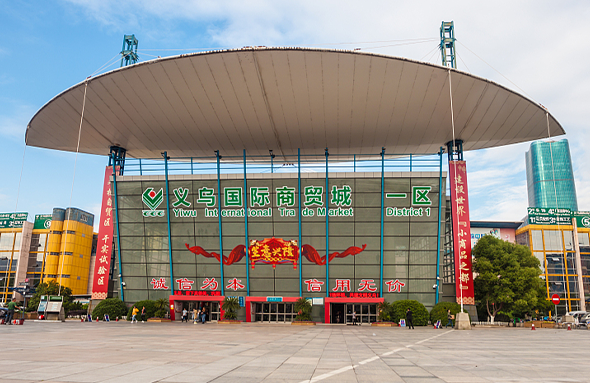
Yiwu is one of the world's most concentrated small-commodity supply chains — gift items, household accessories, seasonal products, promotional goods, and lifestyle categories. A Yiwu agent service that operates locally can run same-day factory visits, rapid sample iterations, and multi-factory comparisons on a timeline that remote management cannot match.
For brands running continuous new-product testing — launching four to eight new SKUs per quarter — this speed advantage compounds significantly.
A scalable private label brand relies on a repeatable sourcing workflow: vetting → sampling → spec lock → QC → delivery.
The outcomes of a structured sourcing system are measurable. Track these KPIs across your first three to four reorder cycles to confirm the system is working:
| KPI | What It Measures | Target Direction |
|---|---|---|
| First-article approval pass rate | Does the production sample match the golden sample on the first attempt? | Above 85% indicates spec control is working |
| Pre-shipment defect rate (AQL) | What percentage of units fail inspection before shipping? | Below 2.5% for most consumer goods |
| On-time delivery rate | Does production complete and ship within the agreed window? | Above 90% |
| Landed cost variance | How much does actual cost deviate from the quoted cost? | Within ±5% |
| Reorder repeatability | Does batch two match batch one on key quality indicators? | Tracked per SKU; any consistent deviation investigated |
The gross margin impact of moving from unstructured to structured sourcing is typically visible by the third reorder cycle: lower defect rates reduce return and replacement cost; better packaging specs reduce damage in transit; tighter cost control reduces surprise invoices.
A private label brand is built one product system at a time. Here is the execution sequence that works:
Before approaching any China sourcing agent, document what cannot be compromised: target materials, performance requirements, packaging standards, compliance needs, and the retail price point you need to hit to be viable. This brief is the foundation of every supplier conversation.
A sourcing brief should include: product category and reference links, target FOB or landed cost per unit, required MOQ range, required certifications or labels for the target market, customization requirements (logo, color, materials, packaging), and timeline for sampling and bulk delivery.
Your China sourcing agent shortlists two to four factories and coordinates sample production. Evaluate samples against your non-negotiables — not against your first impression. Document what passes and what fails in writing.
When a sample meets requirements, formally approve it, retain physical units, and finalize the complete BOM and packaging specification in a signed document. Any change from this point requires written approval from both sides.
Before any large-scale production run, complete a pilot order — typically 20–30% of your planned first batch. Run a pre-shipment inspection against the golden sample and the BOM. Use the findings to refine the production process before scaling.
Once the system is validated, reorder against the same specs with the same QC protocol. Maintain a supplier scorecard that tracks on-time delivery, defect rate, and responsiveness. This data protects you in supplier negotiations and gives you an objective basis for any sourcing decisions.
For multi-SKU brands, the Yiwu agent service model is most effective at Step 3 onward — rapid sample iteration across multiple factories in the same supply cluster, with a local operator who can physically verify product quality and factory conditions without the delays of remote management.
| Risk | How It Appears | Prevention |
|---|---|---|
| Agent acting as hidden middleman | Price markups without transparency | Require factory invoice visibility; agree on fee structure upfront |
| Silent material substitution | Batch 2 quality differs from batch 1 with no explanation | Enforce golden sample comparison on every pre-shipment inspection |
| Over-reliance on one supplier | Supply disruption creates stockout with no backup | Qualify a second supplier for any SKU above a defined revenue threshold |
| Scope creep in agent relationship | Agent manages more than they have capacity to do well | Define the product categories and volume within their operational capability |
Product category and reference photos or product links
Target order quantity per SKU and target price range
Required customization: logo, color, materials, packaging specifications
Target market and country, and any compliance or label requirements
Desired timeline: sample deadline and bulk delivery date
Fee structure and how it relates to factory pricing (transparency on margins)
Sample process: timeline, cost, and who retains the golden sample
QC methodology: what is inspected, at what AQL, and how results are reported
Communication protocol: who is your point of contact, and what is the response time standard
References: brands they have worked with and the product categories they have managed
| Frequency | Action |
|---|---|
| Per order | Pre-shipment inspection against golden sample; landed cost vs. quote reconciliation |
| Per quarter | Supplier scorecard review; new product pipeline brief for next sourcing cycle |
| Per year | Full supplier audit; review agent performance against KPIs; identify any single-source risk |
| Ongoing | Document all spec changes with written sign-off; update golden sample when product is revised |
Q1: What does a China sourcing agent actually do?
A China sourcing agent is a local operator who manages the full supplier relationship on behalf of a brand: factory discovery and vetting, sampling coordination, spec documentation, production quality control, and logistics coordination. The value is local presence, supply chain knowledge, and process discipline — replacing the coordination load that would otherwise require a full-time in-country team.
Q2: When does a Yiwu agent service make more sense than buying factory-direct?
Factory-direct works for single-SKU, stable products where the relationship is established and quality is consistent. A Yiwu agent service is more effective for multi-SKU sourcing operations, frequent new product development, or any situation where managing multiple supplier relationships simultaneously would create more coordination burden than a brand can efficiently handle from outside China.
Q3: How do I calculate ROI on a China sourcing agent?
Track four metrics across two to three reorder cycles before and after engaging an agent: defect rate (and associated return cost), on-time delivery percentage, landed cost per unit, and time from brief to approved sample. If the agent's fee is less than the combined value of defect reduction, margin improvement, and time saving — the ROI is positive. Most structured sourcing programs show clear positive ROI by the third reorder cycle.
Q4: What pilot KPIs should I track before committing to scale?
Track first-article approval pass rate (does production match the golden sample on the first attempt), pre-shipment defect rate against your AQL standard, packaging damage rate on arrival, on-time shipment percentage, and landed cost variance against the original quote. If all five are within acceptable ranges after one pilot cycle, scale with confidence.
Q5: What do I need to send to get an accurate sourcing quote?
Product specifications or reference photos, target quantity per SKU, target market and any compliance requirements, customization details (logo, color, materials, packaging), and your timeline for samples and bulk delivery. Providing a comparable competitor product link and your target retail price helps the agent give you a more accurate landed cost estimate against a real margin model.
A private label brand that lasts is built on repeatable process, not one-off luck. The right China sourcing agent with strong Yiwu agent service capability gives you the infrastructure to launch faster, reduce defects, protect margins, and scale SKUs without the supply chain chaos that stops most brands at their first growth ceiling.
 0086-579-85208991
  info@binachina.com
 English