
Most importers focus on getting the freight rate down. The experienced ones focus on getting the total landed cost down — which is a different problem entirely. A lower freight rate that requires three split shipments, two air upgrades, and a damage claim rarely saves money. The real cost driver is not the rate. It is the logistics architecture around the rate.
A professional forwarder agent in China builds that architecture: consolidation, storage timing, carton verification, and shipment planning that converts scattered supplier outputs into one controlled, cost-efficient outbound flow. When combined with a capable yiwu logistics agent offering free warehousing, this becomes a measurable operational lever — not just a storage convenience.
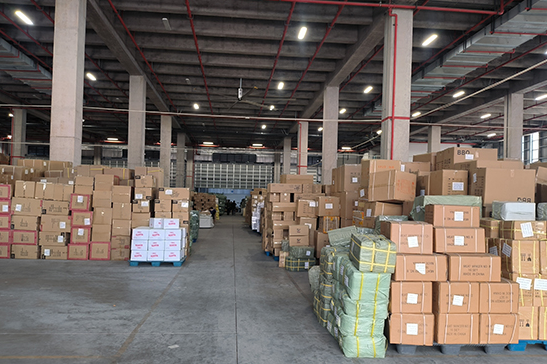
Most importers who over-spend on freight are not paying too much per kilogram. They are paying for the consequences of a fragmented supply chain.
| Fragmentation Problem | Cost Consequence |
|---|---|
| Suppliers finish at different times | Multiple small shipments or missed consolidation windows |
| No buffer inventory space | Forced air freight or express upgrades to meet deadlines |
| Poor carton utilisation | Wasted volume; higher dimensional weight billing |
| Unverified incoming cartons | Damage claims, re-shipments, and missing SKU reconciliation |
| Rushed documentation | Customs delays and destination-side fees |
The pattern is consistent: importers who treat logistics as a booking function — rather than a system — spend more per unit than those who plan the flow from supplier handoff to final dispatch.
What is missing is a controlled intermediate point: a location where goods can arrive from multiple suppliers, be verified, staged, and consolidated into a single optimised shipment on a planned schedule. That is what free warehousing in Yiwu provides.
Free warehousing enables a controlled workflow: receive from multiple suppliers → verify → consolidate → ship once, on schedule.
A yiwu logistics agent with warehouse capacity creates a central receiving point for a buyer's full supplier network — regardless of whether those suppliers are in Yiwu, Guangzhou, Ningbo, or elsewhere in China.
| Stage | What Happens | Why It Matters |
|---|---|---|
| Inbound receiving | Goods arrive from multiple suppliers at different times | Eliminates the buyer's dependency on all suppliers finishing simultaneously |
| Count and carton check | Physical count, condition inspection, photo documentation | Catches shortages, damage, or wrong items before export |
| Staging and labeling | Cartons marked to PO, SKU, and destination requirements | Prevents mixing and missing items during consolidation |
| Consolidation | Multiple suppliers' goods packed into one outbound shipment | Reduces shipment count; improves volume utilisation |
| Flexible dispatch timing | Ship when the full order set is complete | Eliminates rush shipping caused by waiting for the last factory |
| Export documentation | Packing list, commercial invoice, customs declaration | Prepared accurately once, not rushed across multiple partial orders |
Beyond the warehouse, a forwarder agent in China handles the outbound routing decision: which mode (sea, rail, air, or express) matches the deadline and cost target, how cartons should be palletised for the destination, and how to handle split deliveries when part of an order needs to move faster than the rest.
The combination — warehouse control plus forwarding capability — gives importers the flexibility to plan for the economics they want rather than reacting to the logistics problem they have.
The value of a structured warehousing and consolidation system is trackable. Run these KPIs across two to three shipment cycles before and after to confirm the improvement.
| KPI | What It Measures | Expected Direction |
|---|---|---|
| Shipments per month | Consolidation efficiency | Decreases as multi-supplier orders combine |
| Freight cost per unit | Volume utilisation and mode selection | Decreases with better carton fill and fewer split shipments |
| Rush shipping spend | Buffer inventory's ability to absorb supplier delays | Decreases when warehouse timing replaces urgency |
| Damage and claim rate | Carton inspection and packing quality | Decreases with inbound verification |
| On-time delivery rate | System coordination vs supplier chaos | Increases when dispatch is planned, not reactive |
| Missing SKU incidents | Receiving accuracy and labeling discipline | Decreases with standardised inbound protocols |
For multi-supplier, multi-SKU importers, the ROI calculation is straightforward: total the current cost of split shipments, air upgrade spend, and damage claims, then compare against the cost of a structured consolidation workflow. The gap is typically significant by the third cycle.
Step 1 — Brief your yiwu logistics agent Provide the full supplier list with locations, the SKU list with carton dimensions and weights, the target ship window, and the destination details. The agent uses this to plan receiving capacity and consolidation logistics.
Step 2 — Set inbound standards Agree on carton label format (PO number, SKU, quantity, destination), packing list format, and how suppliers should notify the warehouse when goods are dispatched. Standardising this upstream prevents sorting errors downstream.
Step 3 — Inbound receiving and verification Each supplier delivery is received, counted, and photographed. A receiving report is sent to the buyer confirming what arrived, what condition it was in, and any discrepancies versus the purchase order.
Step 4 — Staging and consolidation planning Once the full order set (or a defined portion of it) is received, the forwarder agent in China prepares a consolidation plan: carton arrangement for volume optimisation, any repacking or palletising required, and mixed-SKU separation strategy for the destination.
Step 5 — Mode selection and dispatch Based on the delivery deadline and cost target, select the shipping mode. Sea freight for non-urgent orders. Rail where speed and cost balance is needed. Air or express for urgent exceptions. The yiwu logistics agent prepares all export documents and coordinates pickup.
Step 6 — Tracking and exception handling Post-dispatch, the agent provides tracking, handles any customs or carrier issues, and confirms delivery. Exceptions — delays, inspections, destination customs holds — are communicated proactively.
Best practice: establish a weekly "ready-to-ship" cut-off. Suppliers who are ready by Thursday, for example, join that week's consolidation. Suppliers who are not ready wait for the following cycle. This single discipline eliminates most of the reactive urgency that drives up freight costs.
A warehousing and consolidation workflow only reduces risk if the controls are actually in place. These are the non-negotiable process requirements:
| Risk | Control Required |
|---|---|
| Miscount or wrong SKU from supplier | Written receiving report with count and photos per delivery |
| Missing cartons in consolidation | Consolidation list signed off against receiving records before loading |
| Weak or damaged incoming packaging | Condition check on arrival; damaged cartons flagged before consolidation |
| Documentation errors | Final packing list reviewed and approved before export customs filing |
| Post-shipment claims | Defined claim process: timeframe, evidence requirements, resolution responsibility |
Request evidence of these controls before committing to a warehouse arrangement. An agent who cannot show you a receiving report template and a consolidation checklist is not operating a controlled process.
Q1: What does a forwarder agent in China actually do?
A forwarder agent in China coordinates the full outbound logistics chain: supplier pickup, warehouse receiving and consolidation, export documentation, customs filing, mode selection (sea, rail, air, express), and shipment tracking to the destination. The value beyond basic booking is the ability to manage multiple suppliers and shipment types within one controlled flow.
Q2: Is free warehousing worth it if I only have one or two suppliers?
For single-supplier, single-SKU importers with predictable timing, immediate shipment may be more efficient. Free warehousing delivers the strongest value for importers managing three or more suppliers per order, variable supplier finish times, or frequent new product additions that create consolidation opportunities. If your freight spend is dominated by split shipments or air upgrades, warehousing is worth evaluating even at lower supplier counts.
Q3: How do I calculate ROI from free warehousing in Yiwu?
Add up your current annual spend on: split shipments (fixed costs per booking multiplied by booking count), air or express upgrades you took to meet deadlines, damage and claim costs, and staff time spent coordinating supplier dispatch. Compare this against the cost of a structured consolidation workflow. For most multi-SKU importers running monthly or bi-monthly replenishment, the ROI is positive within two to three cycles.
Q4: What KPIs should I track during a pilot period?
Track shipments per month (consolidation efficiency), freight cost per unit (volume utilisation), rush shipping spend (buffer effectiveness), carton damage rate (inbound inspection quality), on-time delivery rate (system vs reactive planning), and missing SKU incidents (labeling and receiving accuracy). Run the pilot for 60 days across at least two full shipment cycles before drawing conclusions.
Q5: What information do I need to provide for an accurate quote?
Destination country and city, preferred incoterm if known (EXW, FOB, or DDP), cargo type and estimated total volume and weight or carton dimensions, supplier count and approximate pickup locations, expected ready dates per supplier, preferred shipping timeline (standard or urgent), and any special requirements such as palletising, labeling, repacking, fragile handling, or mixed-SKU separation.
Free warehousing in Yiwu is valuable because it converts fragmented supplier deliveries into one controlled, optimised outbound shipment — reducing split freight, rush upgrades, and the coordination overhead that inflates total landed cost for multi-SKU importers. With the right forwarder agent in China and an experienced yiwu logistics agent, warehousing becomes a cost-control system, not just a place to store boxes.
Visit our website and submit your destination, cargo details, supplier count, and target timeline to receive a consolidation plan and quotation.
 0086-579-85208991
  info@binachina.com
 English