
In 2026, importers are managing tighter working capital, more SKUs, and less tolerance for delays and damage claims. The biggest cost leaks often happen before goods ship: suppliers finish at different times, cartons arrive mislabeled, and teams are forced into partial shipments or expensive air freight. A capable forwarder agent in china — operating as a full-service yiwu logistics agent — uses free warehousing and consolidation to control timing, verify quality, and optimize shipment composition. The result: better cash flow predictability and fewer product quality surprises at destination.
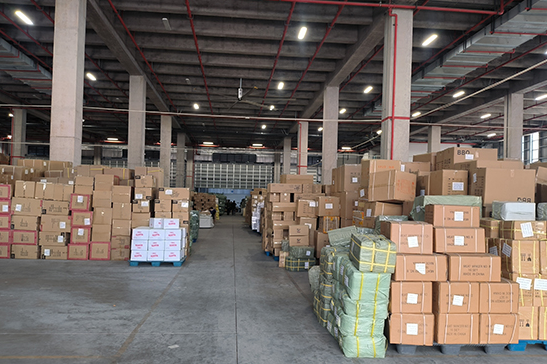
Most logistics problems originate upstream — between factory completion and port departure. The typical failure sequence looks like this:
| Pain Point | Consequence | Cost Type |
|---|---|---|
| Staggered supplier ready dates | Forced partial shipments | Extra freight, booking fees |
| Mislabeled / mixed cartons | Inbound errors, compliance failures | Rework, returns, storage fees |
| No central receiving check | Shortages and damage found after export | Claims, replacements, air top-ups |
| Unplanned rush decisions | Air freight, courier top-ups, late rebooking | Cash flow volatility |
These are not freight problems — they are pre-shipment process problems. A forwarder agent in china with warehouse capability addresses them at the root, before cargo reaches the port.
The core mechanism is straightforward: receive → verify → store → consolidate → ship.
Step-by-step flow:
Goods arrive from multiple suppliers at the agent's warehouse
Inbound receiving: carton count, SKU/PO check, photo documentation, damage flagging
Temporary storage buffer (free warehousing window) holds goods until order is complete
Consolidation: carton optimization, repacking/relabeling if needed, palletizing
Final packing list confirmed, dispatch booked (sea / air / rail / express)
Tracking, exception handling, and claims documentation as required
Why this improves cash flow:
Fewer split shipments reduce per-shipment fixed costs
Better carton utilization lowers chargeable volume waste
Planned ship dates replace reactive booking, eliminating rush premiums
Why this improves product quality:
Central receiving catches missing cartons, wrong SKU, and visible damage before export
Repacking prevents in-transit shifting and moisture exposure
Photo records create an auditable evidence chain if disputes arise
Free warehousing enables controlled consolidation: receive from multiple suppliers, verify, optimize cartons, and ship as one complete order.
Free warehousing only delivers value when paired with disciplined SOPs. When evaluating a yiwu logistics agent, confirm the following operational specs before onboarding:
| Spec Category | What to Confirm |
|---|---|
| Receiving + verification | Counting method, photo/video reporting standard, SKU/PO labeling rules, exception escalation process |
| Storage + handling | Stacking limits, fragile item protocols, pallet availability, moisture/temperature suitability |
| Repacking + labeling | Carton mark capability, barcode/FNSKU printing, mixed-SKU separation, inner-box reinforcement |
| Consolidation rules | Carton optimization logic, shipment split criteria, pallet build standards |
| Documentation + traceability | Packing list format, carton/pallet ID system, export-readiness checklist, claim evidence package |
Practical takeaway: If the agent cannot produce consistent receiving records and a clean, accurate final packing list, consolidation becomes guesswork — and the downstream savings disappear.
Multi-supplier sourcing — common in Yiwu ecosystems where 10–30+ factories contribute to one order
High SKU count brands — home goods, gifts, accessories, seasonal products with staggered completion
E-commerce sellers — needing FBA/3PL label compliance and damage reduction before destination inbound
Buyers with variable production timelines — who need one ship date regardless of supplier delivery sequence
| KPI | Baseline | Target After 30 Days |
|---|---|---|
| Shipments per month | Current count | Reduce by 30–50% |
| Freight cost per unit / CBM | Current rate | Reduce by 10–20% |
| Pre-export damage/shortage incidents | Current count | Reduce to near zero |
| Complete-order departure rate | Current % | Target 90%+ |
| Rush freight spend per month | Current spend | Reduce by 50%+ |
Phase 1 — Setup (Week 1)
Share supplier list + PO list + target ship window with the agent
Agree on inbound labeling rules: PO/SKU marks, packing list template, delivery deadlines
Align on exception escalation: what triggers a hold, what triggers an immediate alert
Phase 2 — Live receiving (Weeks 2–3)
Suppliers ship to warehouse; agent performs count checks, photos, damage flagging
Agent shares receiving reports per PO; buyer confirms or raises issues
Phase 3 — Consolidation + dispatch (Week 3–4)
Consolidation plan finalized: carton optimization, repacking/labeling, palletizing
Final packing list confirmed by buyer; dispatch booked
Tracking provided; exception and claims documentation prepared if needed
Pilot recommendation: Run one product category for 30 days. Measure the five KPIs above before scaling to full order volume.
Free warehousing is not a storage benefit — it is a scheduling, verification, and consolidation control layer that improves both cash flow and product quality simultaneously. With the right forwarder agent in china and a capable yiwu logistics agent, you can consolidate shipments, catch pre-export issues, and ship complete orders on a predictable timeline. The result: lower landed cost volatility, fewer damage claims, and fewer downstream problems at destination.
Ready to get a recommended warehouse + shipping plan and quotation? Contact the team via the logistics storage service page and submit the following details:
Operating conditions: destination country/city, preferred incoterm, shipping timeline (standard/urgent)
Quantity: supplier count, total cartons/pallets, estimated volume/weight
Size/specs: carton dimensions, fragile/oversize notes, labeling requirements (FNSKU, barcode, carton marks)
Target metrics: consolidation goal, freight cost target, damage rate target, delivery deadline
Current problems: split shipments, missing cartons/SKUs, damage claims, rush freight, supplier delays
Q1 What does a forwarder agent in china actually do?
A forwarder agent in china coordinates the full logistics chain from factory to destination: pickup, warehousing, consolidation, repacking and labeling, export documentation, and shipment booking. A full-service agent also handles exception management and claims documentation when issues arise.
Q2 How is a yiwu logistics agent different from a basic freight forwarder?
A basic freight forwarder books and moves cargo. A yiwu logistics agent goes further by adding warehouse receiving, consolidation, relabeling and repacking, and multi-supplier order coordination. The key difference is that quality and completeness problems are addressed before export — not discovered after arrival at destination. For multi-SKU, multi-supplier importers, this distinction directly affects landed cost and downstream service quality.
Q3 How does free warehousing improve ROI and how fast does it pay back?
Free warehousing reduces ROI drag in four ways: it lowers total shipment count (reducing fixed booking costs), improves carton utilization (reducing chargeable volume waste), eliminates most rush freight premiums, and prevents pre-export damage and shortage incidents that would otherwise generate claims and replacement costs. For multi-SKU, multi-supplier importers, payback typically occurs within the first consolidated shipment cycle — often within 30 to 60 days of implementation.
Q4 What should I measure in a 30-day trial?
Track five KPIs against your current baseline: total shipment count per month, freight cost per unit or per CBM, number of pre-export damage or shortage incidents caught at receiving, on-time complete-order departure rate, and total rush freight spend per month. Measurable improvement in at least three of these five metrics within 30 days confirms the workflow is functioning correctly and justifies scaling to full order volume.
Q5 What information is needed for an accurate quote?
To receive an accurate recommended plan and quotation, provide the following: destination country and city, total estimated shipment volume and weight (or individual carton dimensions), number of suppliers and their locations, expected ready dates per supplier, required value-added services (repacking, labeling, palletizing), preferred shipping mode (sea, air, rail, or express), and your target delivery deadline. The more specific your inputs, the more tailored and actionable the recommended plan will be.
 0086-579-85208991
  info@binachina.com
 English