
Global buyers sourcing from the Yiwu market in 2026 are navigating a logistics environment that has become as strategically important as the sourcing decision itself. Sea freight rates that were stable for years have become volatile and unpredictable, with rate spikes driven by port congestion, geopolitical disruptions, and seasonal capacity constraints. Air freight remains fast but expensive—a cost structure that works for urgent samples but cannot support regular replenishment economics. And carbon-related policies in the EU and other markets are beginning to create real financial and reputational pressure on importers to review the emissions profile of their supply chains.
For buyers using a Yiwu wholesale market guide to plan procurement across the market's five districts—covering gifts, toys, hardware, home goods, fashion accessories, and seasonal products—logistics is no longer a final step that gets arranged after the sourcing decisions are made. It is a strategic variable that affects inventory planning, cash flow, sustainability reporting, and competitive response time. The Yiwu-Europe railway, operating as part of the China-Europe rail freight network, offers a middle path that is increasingly relevant: faster than ocean freight on most China-Europe routes, significantly lower cost than air freight, and with a carbon footprint that positions it as a more sustainable option for importers tracking Scope 3 transport emissions.
BinaAgent provides end-to-end support for buyers sourcing from Yiwu—from supplier matching and product quality evaluation through warehouse consolidation, quality control, export documentation, and logistics coordination across rail, sea, air, and courier options.
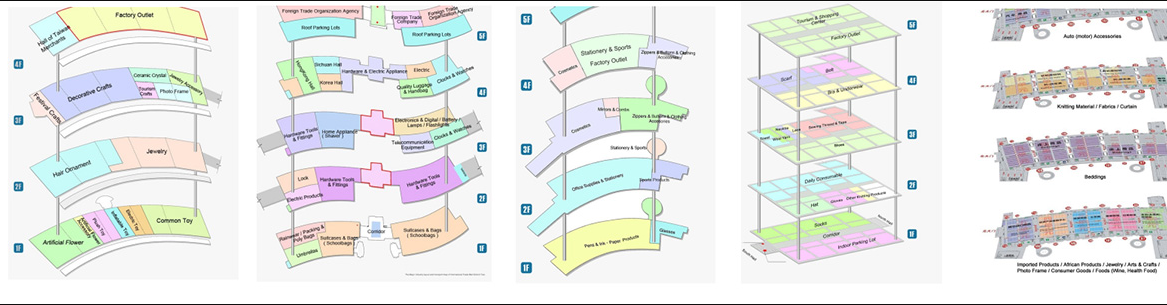
The Yiwu International Trade Market's commercial significance is well understood: it is one of the world's largest small-commodity wholesale markets, with over 75,000 booths across five districts covering virtually every consumer product category. What is less often discussed is the logistics ecosystem that has developed around the market to support its export-oriented trade model.
The sourcing complexity that creates logistics challenges:
A typical international buyer visiting or sourcing from Yiwu does not buy from one supplier. They buy from 10, 20, or 50 different booths across multiple districts—gifts from District 1, toys from District 2, hardware from District 3, seasonal decorations from District 4. Each supplier ships their portion of the order separately to a consolidation warehouse. The warehouse receives, inspects, sorts, and combines these goods into a single export-ready shipment. This consolidation step is where most of the logistics complexity and risk is concentrated—and where a well-organized sourcing agent adds the most operational value.
The 2026 logistics pain points for Yiwu buyers:
Multiple suppliers across different product categories create high consolidation complexity
Small orders from many booths require careful inspection and labeling before export
Sea freight delays and rate volatility make delivery windows unpredictable
Faster replenishment cycles for social commerce and e-commerce demand shorter transit times
Carbon-related policies are creating pressure to review logistics emissions profiles
How the Yiwu ecosystem addresses these challenges:
Yiwu's mature consolidation warehouse network, strong export documentation services, and access to multiple logistics modes—including the Yiwu-Europe railway—make it one of the most logistics-efficient sourcing hubs in China for mixed-SKU, multi-supplier orders. BinaAgent's services cover the full chain from market purchase to international shipment, including supplier sourcing, product quality evaluation, warehouse receiving, consolidation, quality control, export clearance, and logistics coordination.
The operational workflow from Yiwu market purchase to railway dispatch involves more steps than most buyers initially anticipate—and each step has the potential to create delays or quality problems if not managed carefully.
The complete Yiwu sourcing and rail-shipping workflow:
Market sourcing and supplier confirmation. The buyer identifies products across Yiwu's districts, compares samples, prices, MOQ, and packaging options, and confirms order quantities, lead times, and payment terms with each supplier. For buyers working remotely, BinaAgent's local team can conduct market visits, sample evaluation, and supplier negotiation on the buyer's behalf.
Warehouse receiving and inspection. As each supplier delivers their portion of the order to the consolidation warehouse, BinaAgent's team receives the goods, checks quantity against the purchase order, inspects packaging condition, verifies labeling and barcode accuracy, and identifies any defects or discrepancies before they become a problem at the destination.
Consolidation and export preparation. Goods from multiple suppliers are combined into a single export-ready shipment. Customs documents are prepared—commercial invoice, packing list, HS code classification, and export declaration. Shipping marks are applied. Cartons are palletized or loaded according to the chosen shipping method.
Yiwu Port dispatch and rail loading. The consolidated shipment is transported to Yiwu's rail freight terminal, where it is loaded into containers for the China-Europe rail service. Customs clearance is completed at the Yiwu end, and the container is dispatched on the rail corridor.
Transit and destination delivery. China-Europe rail freight typically transits in approximately 12–18 days on major corridors, compared with 28–35 days for ocean freight on many China-Europe routes. At the destination, the container clears customs at the European rail terminal and is delivered to the buyer's warehouse or distribution center.
The rail option is particularly relevant for Yiwu buyers because the market's location in Zhejiang Province gives it direct access to the Yiwu-Europe railway service, which operates regular departures to multiple European destinations including Germany, Poland, Spain, and the UK, as well as Central Asian destinations.
A professional Yiwu wholesale market guide approach to logistics planning requires defining both the sourcing parameters and the logistics parameters before placing orders—not after the goods are ready to ship.
Sourcing and Product Parameters
| Planning Factor | What to Confirm | Why It Matters |
|---|---|---|
| Product category | Gifts, toys, hardware, home goods, fashion accessories, seasonal goods | Determines district, supplier type, and packing method |
| Order structure | Single SKU / mixed SKU / multi-supplier | Affects consolidation cost and inspection workload |
| MOQ | Supplier MOQ and test-order quantity | Helps avoid overbuying on unproven products |
| Packaging | Retail box, carton, FBA label, barcode, fragile packing | Reduces damage and platform rejection at destination |
| Compliance | HS code, product safety certificates, import requirements | Prevents customs clearance delays |
Logistics Parameters
| Planning Factor | What to Confirm | Why It Matters |
|---|---|---|
| Shipping method | Rail, sea, air, courier, multimodal | Balances speed, cost, and carbon profile |
| Destination | Europe, Central Asia, Middle East, US, local warehouse | Determines route, transit time, and customs plan |
| Delivery target | Urgent replenishment vs planned stock | Determines rail vs sea decision |
| Carbon target | Lower-emission logistics requirement | Supports ESG and sustainability reporting |
| Carton dimensions and weight | Per carton and total shipment | Required for freight rate calculation and container planning |
The rail vs sea decision framework:
Rail is typically the better choice when the buyer needs faster delivery than sea freight but cannot justify air freight costs—the middle-ground scenario that applies to most replenishment orders, seasonal product launches, and trend-responsive restocking. Sea freight remains the better choice for lowest-cost, non-urgent bulk shipments where a 28–35 day transit is acceptable. Air freight and courier remain the appropriate choice for urgent samples, viral product pilots, and time-critical small shipments.
Fast Replenishment for Trending Products Social commerce and e-commerce demand cycles have compressed to the point where a 30-day sea freight transit can mean the difference between capturing a trend and missing it. The Yiwu to Europe train reduces transit time by approximately 30–50% compared with ocean freight on many China-Europe routes, allowing buyers to replenish faster without paying air freight prices. For products with a 4–6 week demand window, this transit time reduction can be the difference between a profitable reorder and an overstock situation.
Mixed-SKU Wholesale Orders for European Retail Yiwu buyers typically purchase from multiple suppliers across different product categories. Consolidating these mixed-SKU orders in a Yiwu warehouse and shipping via rail provides a practical logistics solution for European retail chains, gift distributors, and seasonal importers who need a variety of products delivered on a predictable schedule.
Amazon Europe Restocking For Amazon sellers with FBA inventory in European fulfillment centers, rail freight from Yiwu provides a faster replenishment option than sea freight—reducing the risk of stockout events that damage listing rankings and sales velocity. The predictable transit time of rail freight also makes inventory planning more reliable than sea freight, which is subject to greater schedule variability.
Central Asia and Inland Europe Delivery Rail freight is particularly relevant for inland European destinations and Central Asian markets where ocean freight requires significant additional inland trucking after port arrival. The rail corridor connects Yiwu directly to inland European rail terminals, reducing the total door-to-door transit time for these destinations more significantly than the headline transit time comparison suggests.
ESG-Focused Logistics Planning China-Europe rail freight is increasingly positioned as a lower-carbon alternative to air freight for importers tracking Scope 3 transport emissions. For companies with sustainability commitments that include supply chain emissions, shifting replenishment orders from air to rail can contribute meaningfully to carbon reduction targets while maintaining faster delivery than sea freight. BinaAgent can support buyers in documenting the logistics mode choice as part of their sustainability reporting.
Step 1 — Define the sourcing goal and logistics parameters. Product category, target market, quantity, budget, delivery deadline, and carbon target. These parameters determine the appropriate logistics mode and consolidation strategy before market sourcing begins.
Step 2 — Plan the market route. Identify the relevant Yiwu districts for the product categories being sourced. Prepare product reference photos and specifications for supplier comparison. BinaAgent's local team can conduct market visits and supplier evaluation for remote buyers.
Step 3 — Confirm the order strategy. Small-batch test order for new products; bulk follow-up for proven sellers; mixed-container sourcing for multi-category orders; seasonal stock plan for holiday and promotional products.
Step 4 — Execute warehouse consolidation. As goods arrive from multiple suppliers, BinaAgent's warehouse team receives, inspects, and consolidates them into a single export-ready shipment. This step includes quantity verification, packaging inspection, labeling check, and carton condition assessment—the quality control checkpoint that prevents problems from reaching the destination.
Step 5 — Choose the logistics route. Rail for balanced speed and cost on China-Europe routes; sea for lowest cost on non-urgent bulk; air or courier for urgent samples or viral products. For mixed-urgency shipments, a multimodal approach—rail for the main bulk, courier for urgent samples—can optimize both cost and speed.
Step 6 — Complete the export process. Customs declaration, shipping documents, container loading, and tracking coordination. BinaAgent handles the export documentation and customs clearance at the Yiwu end, reducing the administrative burden on the buyer and minimizing the risk of clearance delays.
Shorter delivery time than sea freight on China-Europe routes—typically 12–18 days by rail versus 28–35 days by ocean—reduces the inventory buffer that buyers must maintain to avoid stockouts, improving working capital efficiency.
Lower cost than air freight for suitable cargo makes rail a financially viable option for replenishment orders that cannot wait for sea freight but cannot justify air freight economics.
Reduced inventory pressure from faster replenishment cycles allows buyers to maintain lower safety stock levels, reducing the capital tied up in warehouse inventory and the risk of overstock on trend-sensitive products.
Better consolidation efficiency for mixed-SKU orders through BinaAgent's warehouse coordination reduces the per-unit logistics cost of multi-supplier Yiwu purchases compared with managing multiple separate shipments.
Stronger sustainability positioning from rail freight's lower carbon profile compared with air freight supports ESG reporting and sustainability commitments for importers tracking supply chain emissions.
Successful Yiwu market sourcing in 2026 requires treating logistics as a strategic variable—not an afterthought. The Yiwu to Europe train gives buyers a practical middle option between slow sea freight and expensive air freight, with transit times approximately 30–50% shorter than ocean routes and a carbon profile that supports sustainability commitments. For buyers managing mixed-SKU orders from multiple Yiwu suppliers, BinaAgent's end-to-end service—from market sourcing and supplier coordination through warehouse consolidation, quality control, export documentation, and logistics planning—reduces the complexity and risk of Yiwu market shipping while improving delivery reliability and cost control.
Visit the BinaAgent Yiwu Market District Guide to request a sourcing and logistics plan.
Please submit the following details for an accurate recommendation:
Work condition: Product category, target market, sales channel, delivery deadline, compliance requirements, carbon reduction target
Quantity: Sample order, mixed-SKU order, container order, or monthly and seasonal purchasing plan
Size/spec: Product dimensions, carton size and weight, packaging requirements, labels and barcodes, SKU quantity, destination address
Target metrics: Lead time target, landed cost target, carbon reduction goal, inventory turnover improvement, delivery reliability requirement
Current problems: Sea freight delays, high air freight cost, scattered suppliers, poor consolidation management, customs clearance issues, slow replenishment cycles
1. What is the Yiwu market?
A major wholesale sourcing hub in Yiwu, Zhejiang Province, China—one of the world's largest small-commodity markets with over 75,000 booths across five districts covering gifts, toys, hardware, home goods, fashion accessories, seasonal products, and hundreds of other consumer product categories. It is the primary sourcing destination for international buyers seeking mixed-SKU, small-commodity wholesale products from China.
2. Yiwu-Europe railway vs. sea freight: which is better?
Sea freight is the better choice for lowest-cost, non-urgent bulk shipments where a 28–35 day transit is acceptable. The Yiwu-Europe railway is better when buyers need faster delivery than sea freight—typically 12–18 days transit—but want a more cost-effective option than air freight. Rail is particularly relevant for replenishment orders, seasonal product launches, and trend-responsive restocking where delivery speed affects sales performance.
3. What is the ROI of using rail freight from Yiwu?
ROI comes from faster replenishment (reducing stockout risk and improving sales velocity), lower inventory buffer requirements (improving working capital efficiency), reduced air-freight dependency (lowering logistics cost on time-sensitive orders), better mixed-SKU supply chain flexibility (through warehouse consolidation), and stronger sustainability positioning (supporting ESG reporting with lower-carbon logistics choices).
4. Do buyers need to change their current sourcing process?
Not necessarily. Most buyers keep sea freight for stable bulk orders and add rail freight for urgent replenishment, seasonal products, or Europe-bound mixed-SKU shipments. BinaAgent can support both logistics modes within the same sourcing relationship, allowing buyers to choose the appropriate option for each shipment based on urgency, cost, and sustainability requirements.
5. What parameters are needed for a Yiwu sourcing and shipping quotation?
Product category and reference photos, order quantity and SKU count, supplier status (existing or new), carton dimensions and gross weight, destination country and delivery address, required delivery deadline, packaging and labeling requirements, customs documentation needs, preferred shipping mode (rail/sea/air/multimodal), and current logistics problems such as sea freight delays, high air freight costs, or consolidation complexity.
 0086-579-85208991
  info@binachina.com
 English