
A sourcing trip to Yiwu can be highly productive, but only when the buyer arrives with a product brief, target categories, supplier appointments, market route, interpretation support, and a system for recording quotations. Walking into the market without preparation often produces the opposite result: hundreds of photos, stacks of business cards, inconsistent prices, and no reliable way to decide which supplier deserves a sample or purchase order.
The scale explains why planning matters. Zhejiang government information describes Yiwu International Trade Market as covering more than 6.4 million square meters, with roughly 75,000 booths, 26 major categories, and more than 2.1 million kinds of commodities. No buyer can meaningfully evaluate that entire universe in a short visit. Good business travel arrangements narrow the trip before the plane lands.
This guide provides a practical structure for first-time and repeat wholesale buyers. The 3-day and 5-day schedules are planning templates, not official travel requirements. Train, flight, visa, entry, hotel, and local transport information can change, so buyers should verify current arrangements through official channels before departure.
Business travel arrangements for Yiwu sourcing are the coordinated travel, accommodation, transport, interpretation, market routing, supplier scheduling, and follow-up tasks that turn a business visit into a structured procurement project.
The travel component begins before the ticket purchase. A buyer should know which product categories need to be sourced, whether the objective is market discovery or factory qualification, how many suppliers should be compared, which products require samples, and what decisions must be made before leaving China.
Once the sourcing objective is clear, the travel plan can be built around it. A trip focused on ready-stock general merchandise may spend most time inside the Yiwu market. A private-label project may need one market day followed by factory visits. A repeat buyer may use the trip to resolve quality issues, approve packaging, and negotiate annual pricing rather than discover new products.
BINA's travelling-arrangement page states that its support can include airport transfers, hotel booking, local SIM arrangements, market tours, interpretation, supplier appointments, vehicle coordination, and factory visits. These services are useful when they are integrated with a buyer's sourcing brief rather than treated as a generic tourism itinerary.
Business travel arrangements matter in Yiwu because the market's scale makes random browsing inefficient and increases the risk that the buyer spends time on visually interesting but commercially unsuitable suppliers.
A buyer may encounter several suppliers offering products that look almost identical. The meaningful differences can be hidden in material grade, weight, dimensions, carton quantity, color MOQ, logo method, packaging, production lead time, compliance documentation, and willingness to support repeat small orders. These details take time to collect and normalize.
Without a route, the buyer can spend half a day moving between unrelated categories. Without an interpreter familiar with purchasing, discussions may remain at the level of price and MOQ while specifications stay unclear. Without a quotation template, every supplier writes information differently, making comparison slow after the trip.
The purpose of planning is therefore to protect decision time. The buyer should arrive with a list of “must-see,” “should-see,” and “optional” categories. High-priority appointments should be scheduled during the buyer's strongest working hours. Lower-priority market exploration can fill gaps rather than consume the core schedule.
Business travel arrangements should begin with a sourcing brief before flights are booked so the duration, arrival city, local support, and appointment density match the actual procurement task.
Create a one-page trip objective. Include target categories, approximate annual purchase value, expected order quantities, target markets, compliance concerns, customization level, price targets, current supplier problems, and the decisions you want to make during the trip. A buyer who only says “I want to see toys and home products” will receive a much less focused route than a buyer who lists twelve specific subcategories and target price ranges.
Next, separate supplier discovery from supplier verification. Discovery can happen quickly in the market: collect product options, pricing, MOQ, and sample availability. Verification requires more time: confirm legal entity, factory relationship, production capability, quality system, references, payment details, and documentation. Do not schedule ten “factory audits” in one day and expect meaningful results.
Finally, check official entry and transport information. China Railway's official English 12306 website supports ticket information and booking services, while China's National Immigration Administration publishes guidance for foreign travelers. Rules can change; use official sources close to the travel date rather than relying on old blog posts or screenshots.
Three-day business travel arrangements are best for a buyer with a narrow category list, clear specifications, and a goal of comparing suppliers rather than conducting broad market exploration.
| Day | Morning | Afternoon | Evening Output |
|---|---|---|---|
| Day 1 | Orientation, priority district, shortlist 8–12 relevant booths | Continue category search, collect samples and normalized quotations | Rank suppliers A/B/C; identify missing questions |
| Day 2 | Return to top suppliers for technical clarification and negotiation | Visit one or two selected factories or showrooms if necessary | Update comparison sheet; select sample or pilot-order candidates |
| Day 3 | Resolve samples, packaging, payment, and delivery questions | Review warehouse/logistics workflow and finalize follow-up actions | Create action list with owner and deadline for every supplier |
Day 1 should prioritize breadth within a narrow category. Do not negotiate aggressively with the first supplier before understanding the market range. Collect comparable specifications first. Photograph booth number and supplier card together so product images remain traceable.
Day 2 should convert broad discovery into evidence. Revisit the strongest candidates with a written question list. Compare materials, packing, MOQ, customization, sample lead time, and quality requirements. If a factory visit adds real decision value, schedule it; if the supplier is a market trader with no relevant production control, spend the time on better candidates instead.
Day 3 should close information gaps. The objective is not necessarily to pay deposits before departure. A successful trip can end with a clean shortlist, approved sample plan, normalized quotations, and a documented negotiation path. The buyer can then make a controlled decision after reviewing everything rather than purchasing under time pressure.
Five-day business travel arrangements give multi-category buyers more time to compare market suppliers, visit factories, review samples, and build a sourcing workflow without compressing every decision into one or two days.
Days 1 and 2 can be assigned to two major product clusters rather than scattered categories. Day 3 can focus on supplier revisits and sample review. Day 4 can be reserved for factory visits, packaging suppliers, or specialized showrooms. Day 5 can be used for commercial negotiation, warehouse workflow, logistics planning, and unresolved questions.
A five-day trip is particularly useful when the buyer has 50 or more target SKUs, several product families, private-label requirements, or multiple suppliers to evaluate. The extra time creates room for comparison and reflection. It also allows one failed appointment or unexpected supplier issue without collapsing the entire itinerary.
Do not fill every hour. Leave controlled buffer time for a promising new lead, longer-than-expected negotiation, traffic, sample preparation, or a necessary revisit. A schedule with no buffer looks efficient on paper but tends to produce rushed decisions in practice.
Business travel arrangements for supplier appointments should group meetings by location and decision priority so the buyer spends more time evaluating suppliers and less time moving between districts.
Use a route sheet with supplier name, booth or factory address, contact person, phone or messaging contact, product category, priority level, appointment time, key questions, and expected outcome. For market booths, include district, floor, gate, and booth number whenever available. For factories, include travel time and a backup contact.
Ask the local team to pre-screen appointments. A supplier should not receive a prime appointment slot merely because it responded quickly. Confirm that it actually offers the product, supports the required MOQ, accepts the target customization, and can discuss the destination-market requirements.
When using a Yiwu market guide, the buyer can map product categories to districts before arrival. That avoids trying to “see everything” and makes the route compatible with the market's physical scale.
A useful rule is to attach one decision to every appointment. Examples include “qualify for sample,” “reject due to MOQ,” “confirm packaging cost,” “verify factory relationship,” or “move to final quote.” Meetings without a decision target tend to produce pleasant conversations but weak procurement outcomes.
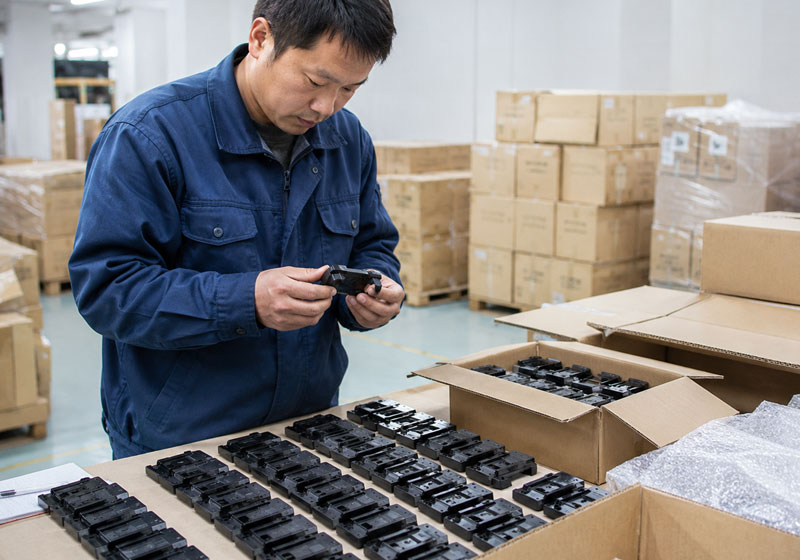
Business travel arrangements for interpretation should provide a purchasing-focused interpreter who can preserve technical meaning, commercial nuance, and written follow-up rather than simply translate casual conversation.
Before each meeting, brief the interpreter on product specifications, target price, non-negotiable requirements, and questions that must be answered. Avoid negotiating only through vague phrases such as “best quality” or “good price.” Translate measurable requirements: material, dimensions, thickness, weight, printing method, packing, defect tolerance, lead time, and order quantity.
The interpreter should also record commitments. If the supplier says the logo fee is refundable after a certain order quantity, write that condition down. If the supplier promises a mixed-color MOQ, record the color breakdown. If the factory says a sample can be completed in seven days, note the date, cost, and shipping method.
For buyers using Yiwu sourcing support, interpretation is most valuable when it is tied to a structured supplier-comparison sheet. The goal is not simply smoother conversation; it is better procurement data.
Daily logistics in business travel arrangements should minimize transit friction so the buyer can begin meetings on time, carry samples safely, stay connected, and recover enough energy to make good decisions over several days.
Hotel selection should be based on the actual visit route rather than tourism popularity. A buyer spending most of the week in the Yiwu International Trade Market may prefer convenience to the relevant district and local sourcing team. A buyer with several factory visits may prioritize road access. Confirm breakfast time, reliable internet, workspace, luggage storage, invoice requirements, and flexible check-in when arrival schedules are uncertain.
Local vehicle planning matters when samples accumulate. A buyer who starts the day with a taxi may finish with four cartons, catalogs, and packaging samples that no longer fit easily. If the trip includes factory visits outside the immediate market area, a dedicated vehicle can reduce appointment risk and simplify sample transport.
Connectivity should also be prepared. Confirm mobile roaming or local connectivity options, access to required business messaging tools, cloud document access, backup copies of product specifications, and a way to scan or photograph signed documents. Sensitive company information should be handled according to the buyer's own IT-security policy.
Business travel arrangements for samples and quotation records create a traceable link between what the buyer saw in Yiwu and what is later ordered, approved, inspected, and shipped.
Assign a temporary code to every serious product candidate. Photograph the product with the supplier's booth card or a written identifier. Record supplier name, contact, quoted specification, MOQ, price tier, packaging, sample fee, lead time, customization options, and key concerns. If the supplier provides a physical sample, label it immediately.
At the end of each day, reconcile photos and notes. Waiting until the buyer returns home can create confusion because similar products blur together. A 30-minute evening review can save hours of later detective work and prevent a purchase order from being sent to the wrong supplier.
Use a scoring model only as a decision aid, not as an automatic answer. A buyer might score price, quality evidence, MOQ flexibility, delivery, packaging, communication, and compliance readiness from 1 to 5. Weight the criteria according to the project. For a seasonal launch, delivery may deserve more weight than a small price difference; for a regulated product, compliance evidence may dominate the score.
Business travel arrangements for factory visits should reserve time only for suppliers whose production capability, customization, quality control, or commercial importance justifies leaving the market.
A factory visit can answer questions that a booth cannot: production flow, equipment, raw-material control, capacity, quality inspection, sample room, warehouse conditions, subcontracting, packaging capability, and current workload. However, simply seeing machines does not prove that the factory produced the buyer's sample or will meet the agreed specification.
Before the visit, ask what the buyer needs to verify. If the main question is production capacity, prepare questions about output and peak-season workload. If the concern is quality, inspect incoming materials, in-process control, test equipment, defect handling, and final inspection records. If private-label packaging is important, visit the packing area and review print approval procedures.
For high-value or high-risk projects, independent due diligence, technical audits, testing, or legal review may still be required. A sourcing trip can improve visibility but should not be treated as a substitute for formal compliance work.
BINA business travel arrangements combine local trip support with sourcing activities so airport pickup, hotel, market guidance, interpretation, supplier meetings, and factory visits can follow one procurement objective.
BINA states that its group was established in 2006 and is headquartered in Yiwu. Its published services include travelling arrangements, sourcing, quality control, logistics and storage, and import-export support. Its About page also states that its network has surpassed 2,000 suppliers and that customers span 70 countries. These are company-published figures and buyers should still request a project-specific plan.
The practical advantage of an integrated service is continuity. The person arranging a market route can understand the product brief; the interpreter can record supplier commitments; the sourcing team can request formal quotations after the visit; the quality team can use the approved sample; and the warehouse team can receive goods against the same SKU list.
When arranging business travel arrangements, send BINA or another provider the category list, travel dates, arrival details, preferred hotel level, language needs, factory-visit goals, number of travelers, and required support. A detailed request allows the local team to build a route around commercial priorities rather than a generic sightseeing-style schedule.
Buyers should also build a post-trip deadline into the itinerary. Within the first working day after the final supplier meeting, consolidate all photographs, quotation sheets, sample codes, open questions, and promised revisions into one master file. Within the next two or three working days, request corrected quotations and missing documents while the discussions are still fresh. A sourcing trip loses value quickly when information sits in separate phones, notebooks, and messaging threads without a controlled follow-up process.
For team travel, assign roles before the first appointment. One person can lead commercial negotiation, another can record specifications and action items, while the local interpreter or sourcing specialist verifies supplier details and clarifies Chinese-language documents. Clear roles reduce duplicated questions and allow the buyer to compare more suppliers without sacrificing the quality of the record.
This business travel arrangements FAQ answers common questions from foreign buyers planning a sourcing visit to Yiwu.
A focused buyer with a narrow category list may accomplish useful supplier comparison in three working days, while a multi-category or private-label project often benefits from five days or more. The correct duration depends on supplier count, factory visits, sample requirements, and decision complexity.
Yes for priority suppliers, factories, and specialized appointments. Market exploration can remain flexible, but important meetings should be pre-screened and scheduled. Confirm the contact and location shortly before the visit.
Many suppliers can communicate some English, but a purchasing-focused interpreter can improve technical accuracy, negotiation, and documentation, particularly when specifications, packaging, quality criteria, or contract terms are detailed.
Yes. Independent buyers can visit the market. A local sourcing team becomes more useful when the buyer needs category routing, translation, supplier follow-up, samples, price normalization, quality control, warehouse receiving, or multi-supplier consolidation.
Only after the supplier, specification, commercial terms, payment recipient, and risk controls have been verified to the buyer's satisfaction. Being physically present should not create pressure to make a premature payment.
Bring product specifications, reference photos, target quantities, target market requirements, packaging instructions, sample criteria, company introduction where useful, and a quotation template. Keep digital backups and avoid sharing confidential design files more broadly than necessary.
Effective business travel arrangements are measured by the quality of procurement decisions produced after the trip, not by the number of booths visited or business cards collected.
Yiwu offers extraordinary supplier density and product variety, but the buyer must convert that variety into a manageable shortlist. A strong trip begins with a sourcing brief, groups categories by location, schedules priority suppliers, uses structured interpretation, labels samples, normalizes quotations, and closes each day with documented follow-up.
The 3-day model works for focused comparison; the 5-day model gives more room for multi-category sourcing, factory visits, and commercial review. In both cases, the trip should end with clear next actions: sample orders, supplier verification, revised quotations, quality requirements, pilot orders, or formal rejection. That discipline is what turns a Yiwu visit into a repeatable sourcing system.
These external references provide official information relevant to Yiwu market scale, China railway travel, and foreign-traveler entry guidance.
 0086-579-85208991
  info@binachina.com
 English